

SEARCH
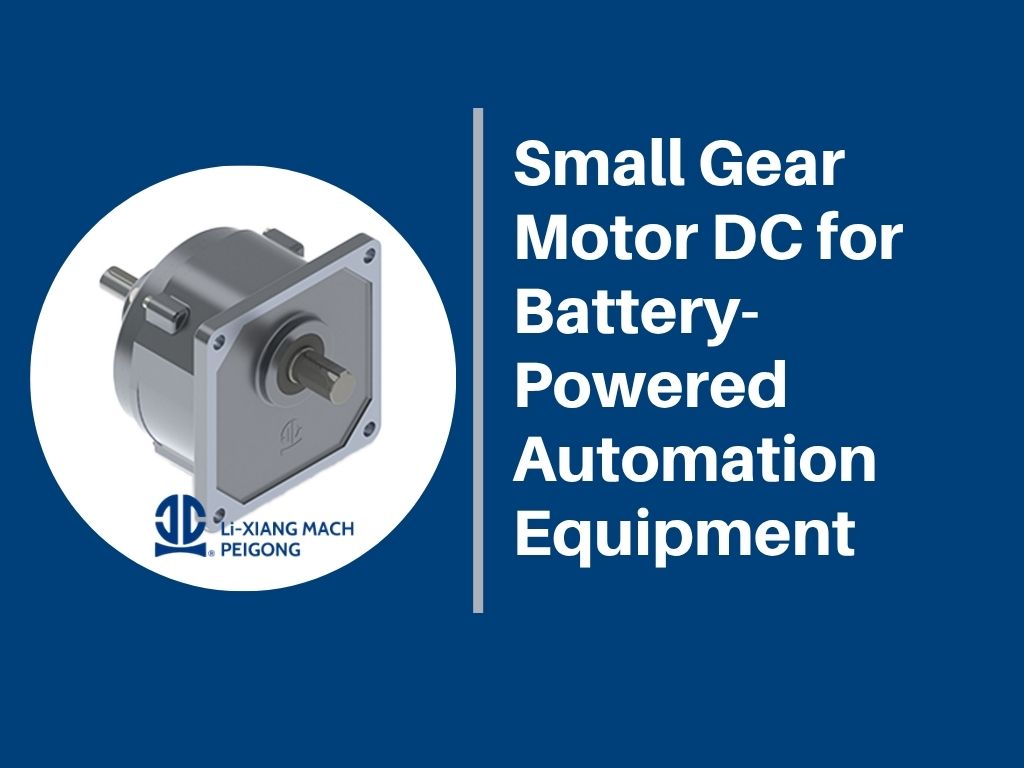
Small Gear Motor DC for Battery-Powered Automation Equipment
Introduction
As automation systems become increasingly mobile and energy-conscious, battery-powered equipment is rapidly expanding across industries such as logistics, smart warehousing, medical devices, and portable automation. In these applications, selecting the right drive solution is critical for balancing performance, efficiency, and operating time.
One component that plays a central role in these systems is the small gear motor DC. Combining compact size, controllable speed, and efficient torque output, DC small gear motors are widely used in equipment that relies on battery power and space-saving mechanical design.
At PEIGONG, we continue to see growing demand for compact DC-driven motion solutions capable of supporting modern automation requirements. This article explores why small gear motor DC systems are ideal for battery-powered automation equipment and what engineers should consider during selection.
Why Battery-Powered Automation Is Growing
Industries are increasingly adopting mobile and cordless automation equipment because of:
-
Flexible factory layouts
-
Reduced wiring complexity
-
Lower installation costs
-
Improved mobility
-
Compatibility with smart logistics systems
Examples include:
-
AGV and AMR systems
-
Portable conveyors
-
Automated carts
-
Compact lifting modules
-
Mobile inspection devices
-
Battery-operated medical equipment
These applications require motion systems that can operate efficiently while minimizing energy consumption.
What Is a Small Gear Motor DC?
A small gear motor DC combines:
-
A DC motor
-
A reduction gearbox
-
An output shaft for torque transmission
The gearbox reduces motor speed while increasing torque, allowing compact motors to drive heavier loads at controlled speeds.
Compared with AC motor systems, DC small gear motors offer several advantages for battery-powered equipment:
-
Lower voltage operation
-
Easier speed control
-
Compact installation size
-
Better compatibility with battery systems
-
Smooth low-speed operation
Energy Efficiency Advantages
Energy efficiency is one of the main reasons why small gear motor DC units are preferred in battery-operated systems.
Lower Power Consumption
DC motors can operate efficiently at low voltages such as:
-
12V
-
24V
-
48V
This makes them highly compatible with battery packs used in mobile automation systems.
Reduced Energy Waste
Properly matched gear reduction minimizes unnecessary motor strain and improves torque efficiency, reducing power loss during operation.
Optimized Runtime
Efficient motor and gearbox combinations extend battery operating time, reducing charging frequency and improving equipment productivity.
Compact Design for Space-Constrained Equipment
Battery-powered automation systems often have limited installation space. A small gear motor DC provides:
-
Compact integrated structure
-
High torque in a small footprint
-
Flexible mounting configurations
-
Simplified mechanical layouts
This is especially valuable in:
-
Mobile robots
-
Compact AGV drive modules
-
Portable medical devices
-
Small conveyor systems
The ability to achieve high torque without increasing equipment size is a major advantage.
Precise Speed Control and Motion Stability
DC small gear motors offer excellent controllability for automation systems requiring:
-
Smooth acceleration
-
Controlled low-speed movement
-
Frequent start-stop operation
-
Direction reversal
With PWM (Pulse Width Modulation) control or integrated motor drivers, speed adjustment becomes highly flexible.
This makes small gear motor DC systems ideal for:
-
Smart warehouse transport carts
-
Positioning equipment
-
Automated dispensing systems
-
Portable robotic modules
Low Noise Operation
Noise reduction is increasingly important in indoor automation environments such as:
-
Hospitals
-
Laboratories
-
Retail automation systems
-
Office logistics equipment
Small gear motor DC systems are often designed with:
-
Precision-machined gears
-
Balanced motor rotors
-
Optimized gear meshing
-
Lubricated enclosed housings
These features help reduce vibration and operating noise.
Reliability in Continuous Mobile Operation
Battery-powered equipment often operates continuously throughout the workday. Reliability becomes critical because unexpected downtime directly affects operational efficiency.
Key reliability factors include:
-
Stable gear tooth engagement
-
Efficient heat dissipation
-
Bearing durability
-
Lubrication stability
-
Resistance to repeated start-stop cycles
At PEIGONG, our small gear motor DC solutions are designed to support long-term stable operation under demanding industrial conditions.
Applications of Small Gear Motor DC Systems
AGV and AMR Equipment
Used in:
-
Auxiliary conveyor modules
-
Steering systems
-
Compact lifting mechanisms
Portable Automation Devices
Including:
-
Battery-powered conveyors
-
Mobile handling carts
-
Automated inspection tools
Medical Equipment
DC gear motors support:
-
Adjustable medical devices
-
Portable diagnostic equipment
-
Compact lifting systems
Smart Logistics Systems
Small gear motor DC units help power:
-
Automated storage modules
-
Transfer carts
-
Sorting systems
Key Selection Factors
When choosing a small gear motor DC for battery-powered automation, engineers should evaluate:
Voltage Compatibility
Ensure compatibility with battery system voltage.
Torque Requirements
Confirm sufficient torque for both continuous and peak load conditions.
Gear Ratio Selection
Balance:
-
Output speed
-
Torque output
-
Motor efficiency
Duty Cycle
Frequent starts and stops require higher durability margins.
Operating Environment
Dust, humidity, and temperature conditions influence housing and sealing requirements.
PEIGONG’s Approach to Small Gear Motor DC Solutions
PEIGONG develops compact DC gear motor solutions focused on:
-
Stable torque transmission
-
Compact installation
-
Smooth low-noise operation
-
Efficient power usage
-
Long-term durability for automation systems
Our small gear motor DC products support a wide range of industrial and mobile automation applications where space efficiency and battery performance are equally important.
FAQ: Small Gear Motor DC Systems
1. Why are DC gear motors suitable for battery-powered equipment?
DC gear motors operate efficiently at low voltages and provide flexible speed control, making them ideal for battery-driven systems.
2. What voltage is commonly used in small gear motor DC applications?
12V, 24V, and 48V are commonly used depending on equipment size and power requirements.
3. Can small gear motor DC units handle continuous operation?
Yes. Properly selected DC gear motors can operate continuously when matched with suitable load conditions and thermal management.
4. Are small gear motor DC systems suitable for AGV applications?
Yes. They are commonly used in AGV auxiliary systems, steering mechanisms, and compact transfer modules.
Conclusion
As automation equipment becomes more mobile, compact, and energy-efficient, the importance of reliable DC-driven motion systems continues to grow. A well-designed small gear motor DC solution offers the ideal balance of compact size, efficient torque output, controllable speed, and battery compatibility.
By selecting the right motor configuration, gear ratio, and operating voltage, equipment designers can improve runtime, reduce energy consumption, and enhance long-term reliability.
Looking for a compact and reliable small gear motor DC solution for your automation equipment?
Contact PEIGONG’s technical team to discuss the right motor configuration for your battery-powered application.