

SEARCH
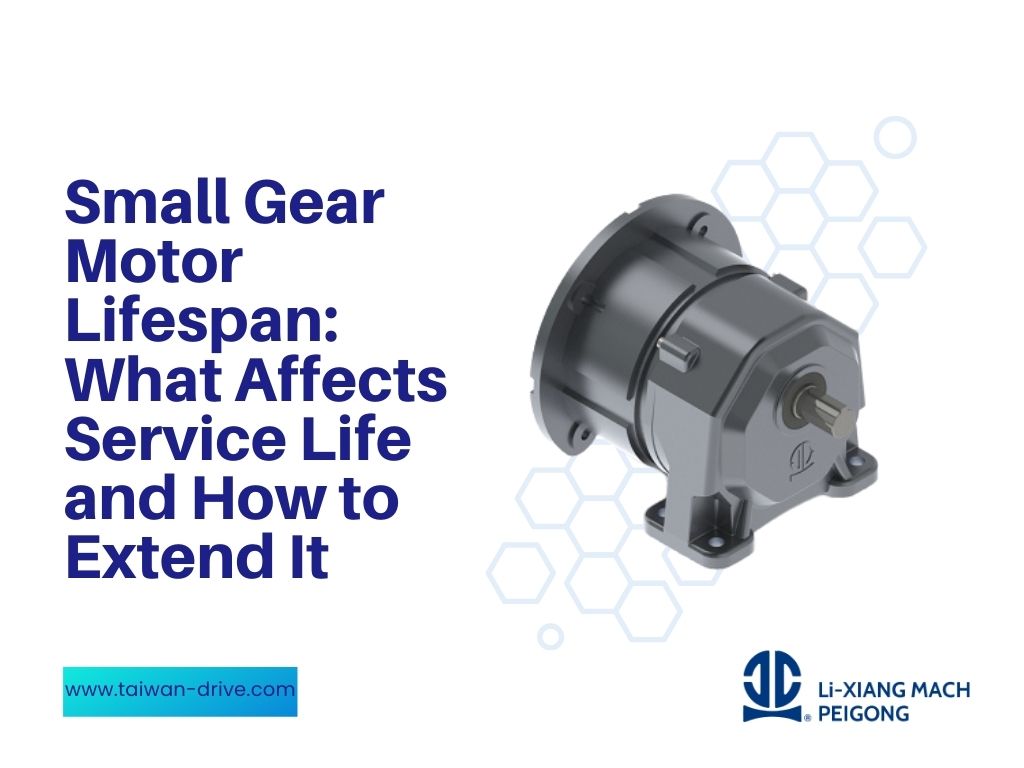
Small Gear Motor Lifespan: What Affects Service Life and How to Extend It
Introduction
In modern automation and compact machinery, the small gear motor plays a crucial role in delivering controlled motion, stable torque, and reliable continuous operation. From conveyors and packaging units to medical devices and positioning systems, small gear motors are widely used because they combine compact size with effective torque multiplication.
However, one of the most common questions engineers and equipment builders ask is: how long will a small gear motor last? The service life of a small gear motor is not determined by a single factor. Instead, it depends on load conditions, duty cycle, temperature, lubrication, installation quality, and operating environment.
At PEIGONG, we regularly help customers evaluate drive system durability and optimize small gear motor selection for long-term performance. Understanding what affects small gear motor lifespan — and how to extend it — can significantly reduce downtime and maintenance costs.
What Defines Small Gear Motor Lifespan
The lifespan of a small gear motor is typically measured by:
-
Operating hours before failure
-
Gear tooth wear condition
-
Bearing life
-
Lubrication stability
-
Output torque consistency
-
Noise and vibration increase over time
A properly selected and correctly operated small gear motor can often run for many thousands of hours under rated conditions. Problems usually arise when real-world operating conditions exceed design assumptions.
Load Level and Torque Margin
One of the biggest factors affecting small gear motor lifespan is load percentage relative to rated torque.
Operating continuously near maximum rated torque will:
-
Increase gear tooth stress
-
Accelerate bearing wear
-
Raise internal temperature
-
Shorten lubricant life
Best practice is to select a small gear motor with a safety margin — typically operating at 60–80% of rated load rather than at full capacity. This significantly improves long-term durability.
Shock loads are also important. Even if average torque is acceptable, repeated sudden load spikes can cause micro-pitting and fatigue damage inside the gearbox.
Duty Cycle and Start-Stop Frequency
Not all small gear motor applications run continuously. Some systems start and stop frequently, reverse direction, or operate intermittently.
High start-stop frequency increases:
-
Inrush current in the motor
-
Mechanical stress on gear teeth
-
Thermal cycling inside the gearbox
Applications such as indexing tables and positioning systems should consider start frequency when selecting a small gear motor. Oversizing slightly for these applications often extends service life.
Temperature and Heat Management
Temperature is a silent lifespan killer for small gear motors.
Excessive heat causes:
-
Lubricant breakdown
-
Seal hardening
-
Increased friction
-
Reduced bearing life
Heat may come from:
-
Overloading
-
High reduction ratios
-
Poor ventilation
-
High ambient temperature
-
Continuous duty operation
Proper housing design, correct ratio selection, and adequate airflow all help extend small gear motor lifespan.
Lubrication Quality and Stability
Gear lubrication plays a central role in small gear motor durability. Lubricant performance affects:
-
Gear tooth wear
-
Friction level
-
Heat dissipation
-
Noise generation
Key lifespan factors include:
-
Correct lubricant type
-
Viscosity suited to operating temperature
-
Resistance to oxidation
-
Long-term film strength
In sealed small gear motor units, lubricant selection at the manufacturing stage is especially critical because relubrication may not be frequent.
Installation Alignment and Mounting
Improper mounting is an often overlooked cause of early small gear motor failure.
Common installation issues include:
-
Shaft misalignment
-
Excessive belt or chain tension
-
Soft mounting surfaces
-
Poor coupling selection
Misalignment increases radial and axial bearing loads, which shortens bearing and gear life. Correct mounting structure and alignment checks greatly improve small gear motor lifespan.
Environmental Conditions
Operating environment also affects how long a small gear motor lasts.
Risk factors include:
-
Dust and abrasive particles
-
High humidity
-
Chemical vapors
-
Washdown exposure
-
Outdoor weather conditions
Choosing appropriate sealing levels and housing materials helps protect internal components and extend service life.
Electrical Factors That Impact Lifespan
Electrical supply quality matters too. Small gear motors exposed to:
-
Voltage imbalance
-
Frequent overcurrent
-
Poor motor control tuning
-
Inadequate soft-start control
may experience overheating and insulation stress. Proper motor control settings improve both motor and gearbox longevity.
Design Features That Improve Small Gear Motor Longevity
From a manufacturer’s perspective, several design choices directly improve small gear motor lifespan:
-
Precision gear machining
-
Hardened gear surfaces
-
Optimized tooth geometry
-
High-quality bearings
-
Stable lubrication systems
-
Rigid housing structures
PEIGONG small gear motor designs focus on stable torque transmission, smooth meshing, and controlled thermal behavior to support long operating life across industrial applications.
Preventive Maintenance Practices
Even sealed small gear motors benefit from periodic checks:
-
Monitor noise and vibration changes
-
Check mounting bolts
-
Inspect coupling wear
-
Verify operating temperature
-
Review load conditions
Early detection of abnormal behavior prevents unexpected failure.
FAQ: Small Gear Motor Lifespan
How long does a small gear motor typically last?
Under proper load and temperature conditions, a small gear motor can operate for many thousands of hours. Lifespan depends heavily on load level, duty cycle, and environment.
Does running at lower load extend small gear motor life?
Yes. Operating below rated torque significantly reduces internal stress and increases service life.
Do frequent starts shorten small gear motor lifespan?
Frequent start-stop cycles increase electrical and mechanical stress. Applications with high cycling rates should consider higher safety margins.
Is overheating the most common failure cause?
Yes. Excess heat accelerates lubricant degradation and bearing wear, making temperature control critical.
Conclusion
Small gear motor lifespan is shaped by real operating conditions — not just catalog ratings. Load margin, duty cycle, temperature control, lubrication quality, and proper installation all play essential roles in long-term reliability.
By selecting the correct small gear motor and designing with realistic safety margins, equipment builders can significantly extend service life and reduce maintenance risk.
PEIGONG continues to support industrial users with robust small gear motor solutions engineered for durability, stable torque delivery, and dependable long-term performance.
Need help selecting a long-life small gear motor for your application? Contact PEIGONG’s technical team for selection guidance and engineering support.