

SEARCH
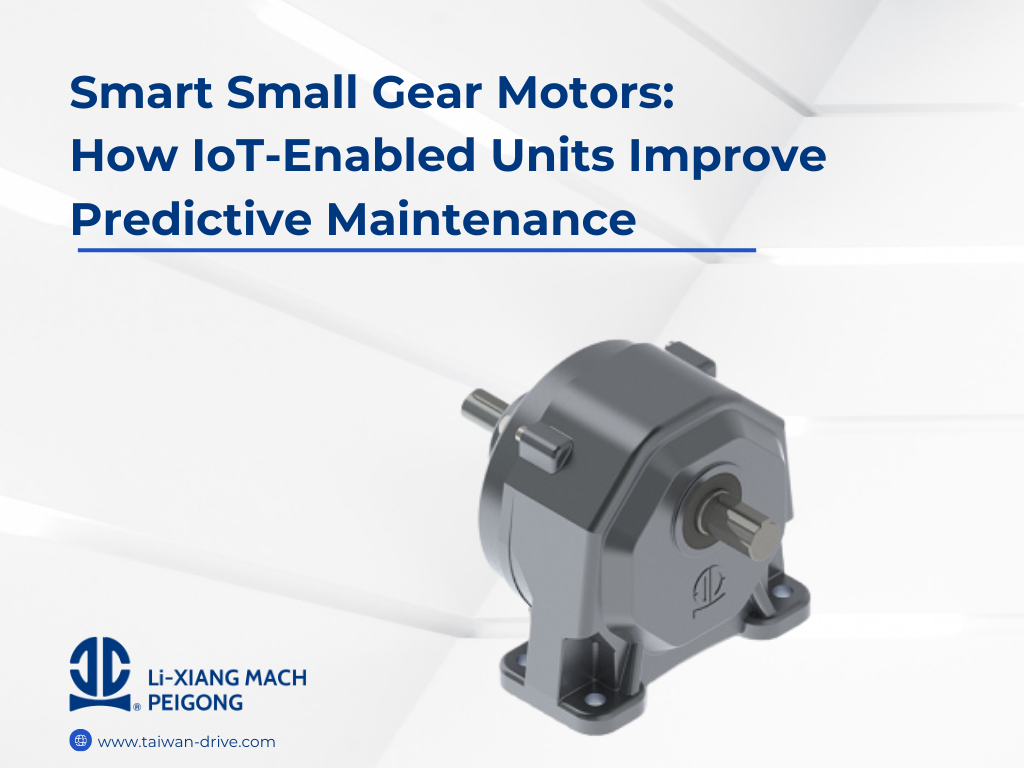
Smart Small Gear Motors: How IoT-Enabled Units Improve Predictive Maintenance
Introduction
In an era where industrial automation is shifting toward smarter, data-driven operations, small gear motors are no longer just mechanical components—they are evolving into intelligent systems. With the integration of Internet of Things (IoT) technology, small gear motors can now offer real-time feedback, fault detection, and performance optimization capabilities.
At PEIGONG, we recognize the growing need for maintenance efficiency and equipment uptime in modern factories. That’s why we support the development of smart small gear motors as part of a predictive maintenance ecosystem—designed to reduce downtime, extend asset life, and lower operational costs.
This article explores how IoT-enhanced small gear motors work, their role in predictive maintenance strategies, and the benefits they bring to industrial automation and smart manufacturing.
The Role of Small Gear Motors in Automation
Small gear motors are compact power transmission systems that combine a motor with a gearbox. They are commonly used in:
-
Conveyor systems
-
Packaging equipment
-
Food and beverage machinery
-
Lab automation
-
Textile and printing equipment
Their primary functions are to provide torque, control speed, and ensure accurate positioning in compact or limited spaces.
Traditionally, these gear motors operated as “dumb” devices—running until failure or requiring regular manual inspections. But with the demands of Industry 4.0, these motors are being upgraded with smart sensors and IoT connectivity to offer real-time visibility into motor health and performance.
What Makes a Gear Motor “Smart”?
A smart small gear motor typically includes the following:
-
Embedded Sensors: Measure vibration, temperature, current, torque, or speed
-
Connectivity Modules: Enable data transmission via protocols like MQTT, OPC UA, or Ethernet/IP
-
Edge Processing Units: Perform basic data analysis at the device level
-
Cloud/SCADA Integration: For centralized monitoring and trend analysis
By integrating these technologies, the gear motor becomes an intelligent node in a larger IIoT (Industrial Internet of Things) network—capable of detecting early signs of wear, imbalance, or overload.
Predictive Maintenance vs. Traditional Maintenance
Predictive maintenance (PdM) is a strategy that uses real-time data to anticipate equipment failure before it happens. Unlike reactive maintenance (fix after failure) or preventive maintenance (fix on schedule), predictive maintenance focuses on condition-based monitoring.
Here’s how they compare:
| Approach | Description | Limitation |
|---|---|---|
| Reactive | Repair after failure | Unexpected downtime, high costs |
| Preventive | Scheduled based on usage or time | May replace parts too early/late |
| Predictive (PdM) | Based on actual operating conditions | Requires sensors and analytics |
With smart small gear motors, predictive maintenance becomes feasible even for compact and cost-sensitive equipment that was previously overlooked.
Key Benefits of IoT-Enabled Small Gear Motors
1. Reduced Downtime
By detecting issues like overheating, excess vibration, or misalignment before they cause failure, smart motors help reduce unplanned shutdowns. Alerts can be configured to notify maintenance teams before serious damage occurs.
2. Extended Equipment Life
Smart diagnostics allow operators to address minor issues—like lubrication problems or misalignment—early on. This prevents damage escalation, helping to extend the lifespan of both the motor and the driven equipment.
3. Optimized Maintenance Scheduling
Instead of routine manual checks, maintenance is performed only when sensor data indicates actual need. This minimizes labor and avoids unnecessary part replacements.
4. Energy Efficiency Monitoring
IoT systems can track current draw and efficiency over time. If a gear motor begins to consume more energy, it could be a sign of mechanical resistance or internal wear.
5. Data-Driven Decision Making
Historical motor data enables better decisions regarding equipment upgrades, load balancing, and process optimization. It also aids in root cause analysis of failures.
Common Applications Using Smart Small Gear Motors
-
Automated Warehouses: Smart gear motors power conveyor belts and shuttle systems while monitoring system load and efficiency.
-
Pharmaceutical Equipment: Ensures consistent motor performance in precision-driven lab automation tools and mixers.
-
Food & Beverage Packaging: Detects abnormal torque or misalignment in fill-and-seal machinery, improving uptime.
-
AGVs & AMRs: Used in drive systems where intelligent motor feedback is crucial for motion control and system safety.
-
HVAC & Cleanroom Systems: Smart motors optimize airflow control while tracking filter blockage or actuator resistance.
Implementation Considerations
Before integrating smart gear motors into your system, consider the following:
-
Environment: Ensure that sensors and communication modules are suitable for high-humidity, high-temperature, or dusty environments.
-
Data Infrastructure: Use a centralized system to collect and analyze sensor data for meaningful insights.
-
Interoperability: Choose motors that support industry-standard protocols for seamless integration into SCADA or MES platforms.
-
Cybersecurity: Secure data transmission and access control are critical when connecting devices to the cloud or enterprise network.
PEIGONG’s Approach to Smart Motion Solutions
At PEIGONG, we are constantly exploring ways to upgrade our mechanical solutions for the digital age. We collaborate with industry partners to offer small gear motors compatible with IoT sensors, modular enclosures for signal routing, and IP-rated protection for industrial environments.
Whether you're building a smart conveyor system, designing compact robotics, or upgrading a legacy assembly line, our gear motors provide the mechanical performance and digital readiness needed for modern operations.
Conclusion
IoT-enabled smart small gear motors represent a major leap forward in predictive maintenance, giving engineers and maintenance teams the tools to maximize uptime, efficiency, and safety. By continuously monitoring motor health and transmitting data to cloud-based systems, these devices transform from passive components into intelligent assets.
As factories and equipment manufacturers embrace Industry 4.0, investing in smart small gear motors can help future-proof operations and reduce long-term maintenance costs.
Interested in integrating predictive maintenance into your next project? PEIGONG is ready to support your journey with compact, high-performance gear motor solutions built for the smart factory era.