

SEARCH
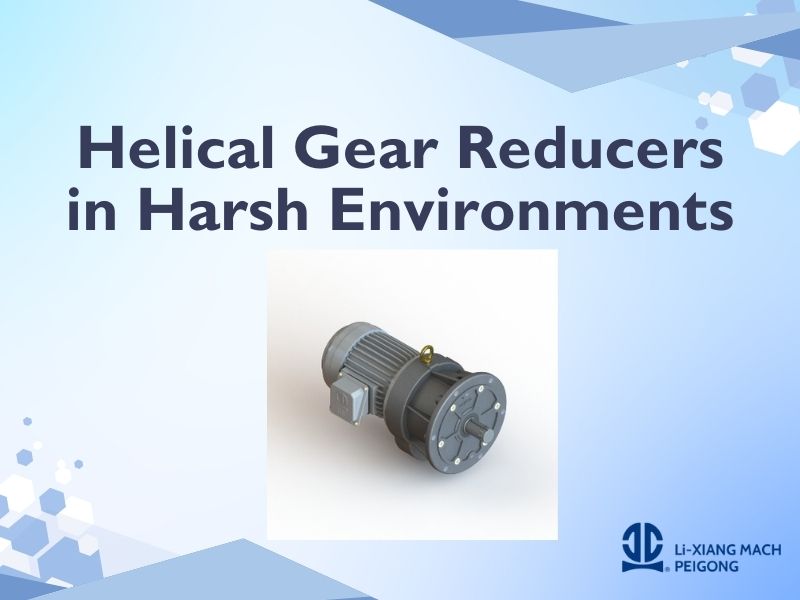
Helical Gear Reducers in Harsh Environments: Performance and Material Selection
Introduction
Helical gear reducers are known for their smooth, quiet, and energy-efficient operation—making them a mainstay in power transmission systems. However, when these components are deployed in harsh industrial environments, their reliability depends heavily on robust design and proper material selection.
At PEIGONG, we understand the importance of engineering gear reducers that not only perform well under standard conditions, but also excel in extreme operating environments such as high temperatures, corrosive atmospheres, and abrasive workspaces.
Why Harsh Environments Pose Unique Challenges
Operating a helical gear reducer in a demanding environment introduces factors that can significantly shorten its service life if not properly addressed. Common challenges include:
- Temperature Extremes: Excessive heat can degrade lubricants and expand materials, while freezing temperatures increase brittleness and viscosity.
- Abrasive Particles: Dust, metal shavings, or sand can enter housings and damage gear teeth or bearings.
- Moisture and Humidity: Promotes rust formation, lubricant emulsification, and seal failure.
- Chemical Exposure: Acids, alkalis, or solvents corrode metal surfaces, compromising structural integrity.
- Shock and Vibration: Sudden load changes or continuous vibration can lead to fatigue and microcracks in gear teeth.
Without proper mitigation, these factors can cause unplanned downtime, higher energy consumption, and long-term mechanical failure.
Material Selection: Building for Resilience
Housing Materials
The housing serves as the first barrier against environmental impact. Depending on the working environment, suitable materials include:
- Cast Iron: Excellent vibration damping and mechanical strength. A good balance of cost and durability for heavy-duty operations.
- Aluminum Alloy: Lightweight and naturally corrosion-resistant, ideal for compact designs and humid environments.
- Stainless Steel: Used in food processing and chemical industries for its superior resistance to rust and chemical attack.
- Epoxy-Coated Housings: Provide additional protection against corrosion and chemical spills.
Gear and Shaft Materials
Inside the housing, the gears and shafts must deliver continuous performance despite thermal and mechanical stresses:
- Carburized and Hardened Steel: Offers exceptional surface hardness and internal strength. Often used in precision ground gears.
- Alloy Steels with Surface Coatings: Coatings like black oxide, phosphate, or chrome plating help prevent oxidation and wear.
- Case-Hardened Gears: Provide wear resistance on the surface while maintaining a ductile core for shock absorption.
Advanced Lubrication and Sealing Systems
In extreme conditions, standard lubricants and seals may not be sufficient.
- Synthetic Lubricants: Offer consistent viscosity over a wide temperature range and resist breakdown from contaminants.
- Food-Grade Lubricants: Essential in applications like food and beverage processing, where incidental contact with machinery may occur.
- Seals and Gaskets: Materials like FKM (Viton) or PTFE provide superior chemical and thermal resistance, crucial for long-term sealing in harsh environments.
- Double Lip Seals: Provide added protection against both ingress and egress of fluids and particles.
Engineering Enhancements for Harsh Conditions
Many helical gear reducers designed for tough environments include specific enhancements:
- IP-rated Enclosures: IP65 and above ratings ensure resistance to dust and water ingress.
- Overdimensioned Bearings and Shafts: Improve shock resistance and load capacity.
- Cooling Fins or Forced Ventilation: Prevent overheating in high-duty cycles.
- Vibration-Resistant Mounting: Ensures operational stability and reduces fatigue on housing and fasteners.
- Modular Design: Allows quick replacement of damaged components without removing the entire gearbox.
Selecting the Right Gear Reducer for Harsh Conditions
When selecting a helical gear reducer for a challenging application, consider the following:
- Environment Type: Is it marine, desert, cleanroom, or chemical exposure?
- Thermal Load: Will the unit run continuously or intermittently under high load?
- Contamination Risk: Are there particulates, vapors, or corrosive agents in the air?
- Installation Constraints: Will the reducer be installed in a sealed enclosure or exposed directly?
- Maintenance Access: In remote or hazardous environments, longer service intervals may be required.
A consultation with technical specialists—like those at PEIGONG—can help match your requirements to the correct configuration, materials, and protection features.
Applications Where Durability Matters
- Cement and Mining Plants: Gear reducers must resist dust, shock loads, and extreme temperatures.
- Steel Mills and Foundries: Operate under intense heat, heavy loads, and continuous vibration.
- Food & Beverage Processing: Require corrosion-resistant materials and sanitary design.
- Oil & Gas Fields: Face abrasive particles, extreme cold or heat, and explosive environments.
- Marine Systems: Must resist saltwater corrosion and operate smoothly in humid conditions.
PEIGONG’s Helical Gear Reducer Solutions
PEIGONG’s Helical Gear Reducers are engineered to withstand the demands of modern industry. With:
- Hardened and ground gear teeth for smooth, low-noise transmission
- Housing options tailored to the environmental conditions
- Efficient gear geometry for high torque output with minimal backlash
- Optional surface treatments and IP-rated sealing systems
- Modular series (such as PGED, PGVF, PGVD) available for custom integration
Our products are built with long-term reliability and field-tested in the most demanding environments.
Conclusion
Operating in harsh environments demands more than just a standard gearbox—it requires a rugged, well-engineered helical gear reducer designed with the right materials, sealing systems, and performance characteristics.
By choosing the proper configuration and partnering with experienced manufacturers like PEIGONG, industries can ensure their gear reducers deliver optimal performance, minimal maintenance, and extended service life even in the harshest conditions.
Need help selecting the right reducer for your environment? Contact PEIGONG’s technical team for tailored recommendations based on your operational challenges.